Hydropower is one of the oldest forms of renewable energy – the first recorded innovations for using water for power date back to BCE during the Han dynasty in China and the first hydroelectric plant was developed in England in the late 1800s. Basically, the premise is simple: the kinetic/mechanical energy of water falling down a vertical drop on its course (or because of impoundment) is used to spin a turbine, which is connected to a generator that converts the mechanical energy into electricity.
source: https://www.hydropower.org/iha/discover-history-of-hydropower

There are a number of key advantages to hydropower: it is abundant, renewable, affordable, is usually less intermittent than wind or solar and can be coupled with other reservoir management priorities such as flood control, drinking water provision and agricultural support. On the geochemical level, impounded reservoirs can store a great deal of carbon dioxide in biological material.
However, there are a number of key disadvantages as well. It can often have a large societal cost – due to the risk of floods, dam failures, severe evaporative losses and even the displacement of people and communities during the dam infill stage (as was the case with the Three Gorges Dam in China). Hydropower can be intermittent and/or a diminishing resource as a result of hydroclimatic stress – especially in hyper-arid environments, where water levels get progressively lower. But even in very wet environments, flood risks may cause reservoir managers to manage dams differently and to take the hydropower generation potential offline for a period of time to minimize the risk of dam failure. Hydropower can often have a large environmental footprint – disrupting aquatic ecosystems and the decay of organic matter in impounded reservoirs can trigger large releases of methane to the atmosphere. Hydropower’s remaining potential is somewhat more limited than other resources discussed on this page, because many of the world’s major river systems already have a large number of hydropower plants and dams/impoundments.
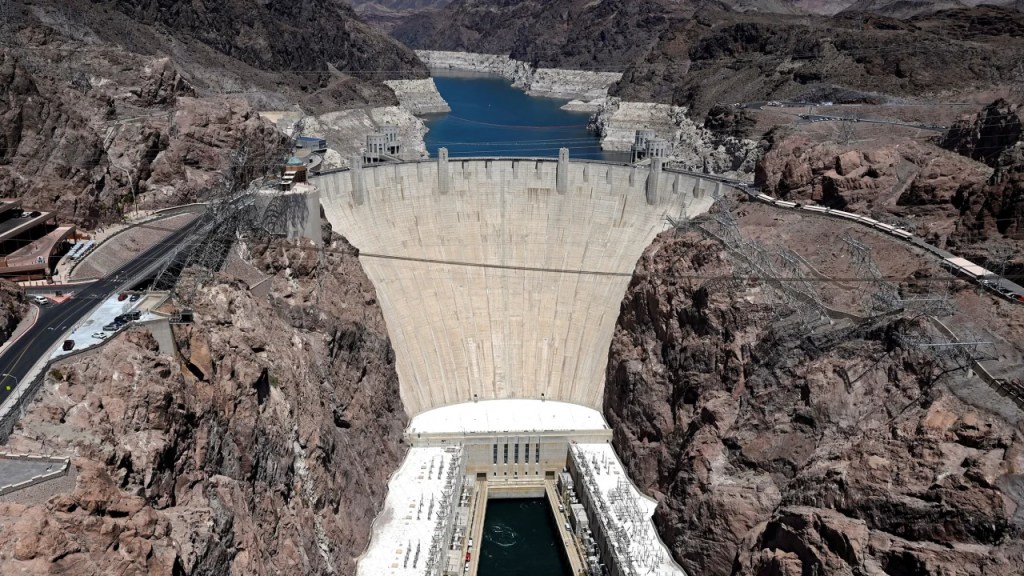
Below is an image of Hoover Dam in the US state of Nevada. As the American SW has experienced a multi-decade long drought, power generating capacity at Hoover Dam has declined by 30-40% over the last decade.
source: https://www.cnn.com/2022/08/16/us/hoover-dam-hydropower-drought-climate/index.html
 asclimateservices.org