The kinetic energy of the ocean can supply another form of renewable energy to society in the form of technology that captures the energy of waves and tides.
Wave Energy: To capture the energy of waves, floating, flexible devices called wave energy converters used to harness the kinetic energy of the waves and convert that energy to electricity. These wave energy converters create hydraulic pressure that turns a turbine or generator. The energy is then sent back to shore via submarine cables. There are several design types for wave energy converters. A basic schematic diagram of an oscillating water column type wave energy converter is shown below.
source: http://www.hann-ocean.com/index.php/products/drakoo.html
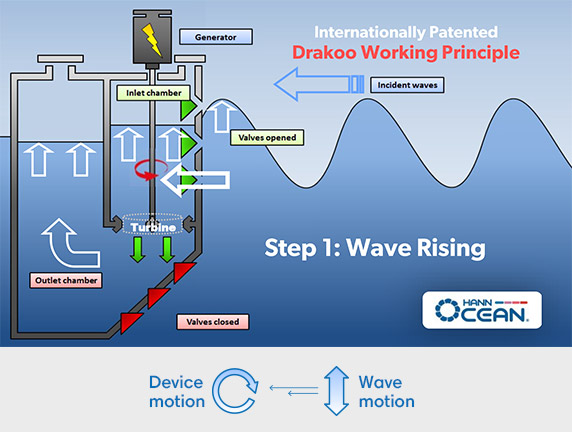

Kinetic wave power is proportional to the square of the height of the waves. Globally, there is tremendous energy in the waves of the world ocean, but there are significant challenges in transmitting that energy back to shore. The energy density of wave produced energy tends to be relatively low and because wave height is a highly variable function of weather, production levels are very inconsistent. Wave energy is likely to be a small contributor to the total global energy mix for years to come. In North America and Europe, the west coasts of each continent are likely to be the best oceanic environments for producing significant wave energy.
The total investment in wave and tidal energy, the uses for the energy and major companies are shown in the figure below.
source: https://www.maximizemarketresearch.com/market-report/global-wave-and-tidal-energy-market/21184/
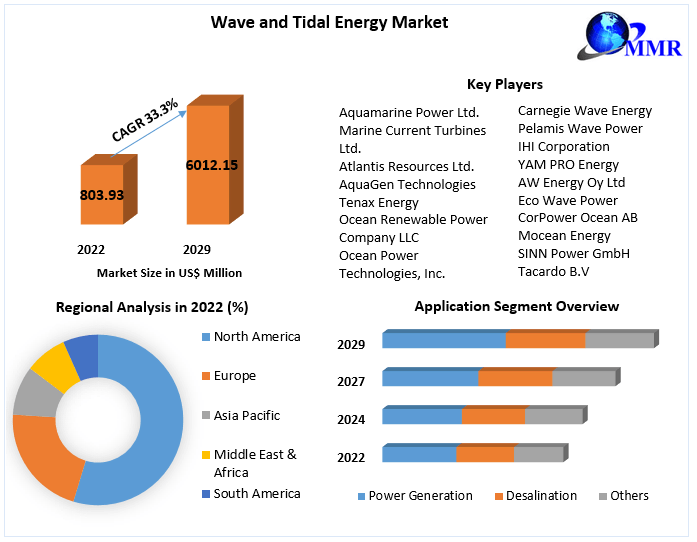
Tidal Energy: While similar to wave energy in some respects, tidal energy can be thought of as as a specialized form of hydroelectric energy and has the advantage of being much more regular than wave energy. The kinetic (tidal stream energy) or potential energy from tidal barrages is used to turn a generator, but is only viable in areas where the tidal amplitude is relatively large, but tidal energy is also likely to remain a relatively small energy resource in the global sense. As a resource, it is more reliable than wave, solar or wind energy. Most of the projects to date are at a relatively small scale – there are projects in the English Channel, the Bay of Fundy in Canada and the East River of NY City. There are both ecological and corrosion related challenges. The two largest tidal plants in the world are over 200 MW and are in South Korea (Sihwa) and France (La Rance).
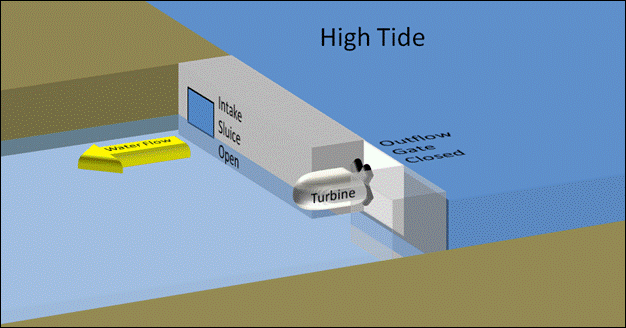
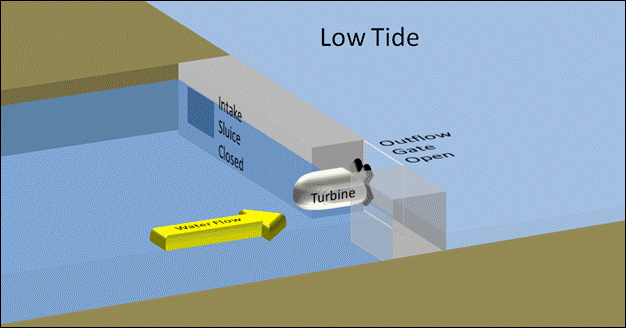
A basic schematic diagram and description of a tidal barrage system is shown below
source: http://tidalpower.co.uk/tidal-barrage
 asclimateservices.org